

The Unspoken Etiquette Hikers Should Keep In Mind When Hitting The Trails
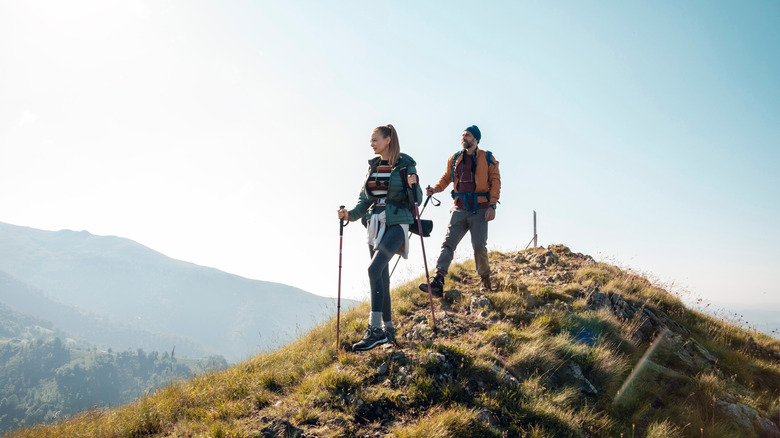
You're halfway up a winding ridge trail, the scent of pine thick in the air and the world hushed except for birdsong and your breath. Then, around a bend, a figure emerges — a fellow hiker. For a brief moment, your eyes meet. What happens next? Do you speak, offer a nod, or just say nothing at all? The answer might seem obvious — give a simple "hello" — but trail etiquette isn't always so clear. In fact, what seems like a simple courtesy carries more weight and opinions than you'd expect.
Some hikers tend to prefer quiet, as some may even find greetings awkward or intrusive. But that tiny gesture still matters. It's a way of making your presence known without startling anyone. It can also spark a quick exchange about trail conditions, wildlife, or the weather. And while the woods may feel far from the structured systems of the everyday world, hiking carries its own etiquette. Whether it's a wave, a nod, or a full "hello there," these micro interactions can shape the entire feel of the trail, both for you and for the next person who walks it.
Why saying a simple hello when hiking matters more than you think

Imagine you're hiking on a quiet, remote trail. Someone passes without a word or even a glance. That silence might seem small, but for beginners, solo hikers, and others who aren't as comfortable on the trail, it can feel unsettling, especially in isolated or rugged environments where they can be easy targets for troublemakers. A simple "hello" in that moment does more than brighten someone's day — it can also help to ease tension.
Exchanging greetings can also be a subtle safety tool on the trail. If something goes wrong, like a fall or a wrong turn, someone who remembers speaking with you is more likely to recall helpful details. As one Reddit user aptly put it, "It's to make sure you can remember them in case they get lost or hurt, and you need to help the rescue party work out where they were last seen." A simple greeting can leave enough of an impression for others to recall your direction, gear, or demeanor — all of which are critical information in dire situations.
Interestingly, there's also a wildlife benefit behind that greeting. According to the National Park Service, talking or even yelling, "Hey, bear!" helps alert wildlife and reduces the risk of surprise encounters. A friendly greeting, in this case, can double as both trail courtesy and bear deterrent. Still, not everyone will respond, as some hikers may be lost in thought, breathless, or simply might not hear you. That doesn't make the gesture any less worthwhile, nor is it a reason to hold it back.
Other hiking etiquette to follow on the trails
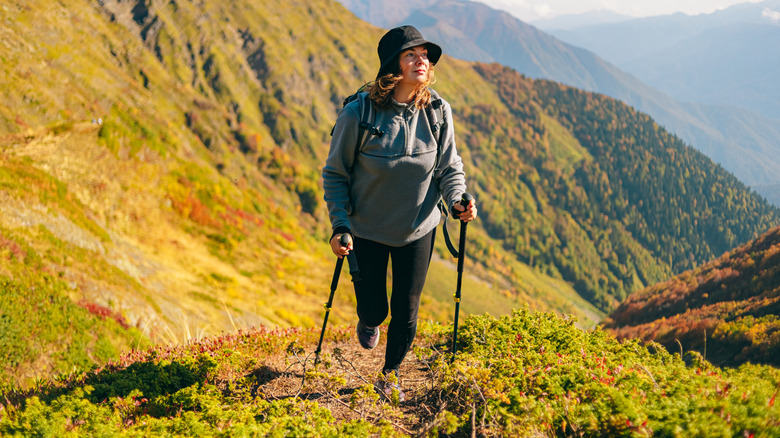
While a friendly "hello" can be considered the first step in trail etiquette, it's far from the only one. Good hiking manners include a handful of simple rules every trail warrior should follow. As this guide on hiking etiquettes and yielding explains, hikers going uphill have the right of way because they're working harder and can't always see what's coming. Cyclists yield to hikers, hikers yield to horses, and everyone should yield with patience and kindness. A quick "thank you" when someone steps aside can make the trail feel more human.
Respecting the trail itself is just as important. Follow the "leave no trace" principles, such as packing out all trash, resisting shortcuts, not disturbing natural features or wildlife, and avoiding blasting music. If you want to listen to something, use a single earbud so you can stay aware of people, animals, or sudden changes in your surroundings. New hikers should stick to well-trafficked routes, hike with others when possible, and review these must-know hiking terms for your next outdoor adventure to better understand signage and terrain.
Importantly, always carry the standard "10 essentials": a navigation tool, a headlamp or flashlight, sun protection, first-aid items, a knife, a fire starter, food, water, emergency shelter, and extra layers. If you're going solo, brush up on some tips to keep you safe while hiking alone to boost your confidence and help you handle the unexpected. If you're hiking with others, match your pace to the slowest person and stay together — especially in remote areas. Most of all, listen to your body. You don't need to summit every mountain to be a great hiker. What matters most is returning safely and staying informed and ready for the next adventure.